ExxonMobil wins Supreme Court battle against Cuba – but the legal fight continues
News from Cuba | Monday, 1 June 2026
Exxon Mobil Corporation v Corporacion CIMEX SA (Cuba)
Since Donald Trump was elected president in 2017, the US blockade against Cuba has intensified. This unlawful and unjustified attack on a sovereign country has been condemned, annually, by votes at the United Nations General Assembly, but still the US persists. While hijacked shipments of oil, and the power cuts that these have caused, make the headlines, the Cuban government is fighting off attacks on another front – the US Courts.
In March 1996 the US Congress passed the Cuban Liberty and Democratic Solidarity Act, sometimes referred to as LIBERTAD, but usually known as the Helms – Burton law. This legislation was opposed by many countries including those in the European Union, including Britain which was then a member. The main objection was that Helms – Burton empowered the US government to sanction people and businesses who traded with Cuba, even in circumstances where the US had no commercial interest in the transaction. This was widely regarded as the US interfering in the laws, sovereignty and trading rights of other countries, including some, like the UK, that considered themselves to be close allies. Britain’s opposition to Helms – Burton was based on the extraterritorial nature of the legislation which was designed to prevent British businesses from trading with Cuba. As the UK had no objection to trade with Cuba, Helms – Burton was seen as an unwarranted interference in its political affairs and an unfair restriction on UK business interests. Although Helms - Burton was referred to the World Trade Organisation, the legislation was duly passed by Congress.
The entire premise of Helms – Burton was unacceptable to Britain, the EU, and other countries, but one section of the legislation stood out as being especially problematic. Title 111 of Helms – Burton conferred rights on US nationals to sue foreign companies which, allegedly, had profited from American – owned property that had been nationalised by the Cuban government. Perhaps as a concession to foreign critics of Helms – Burton, President Clinton announced a six month suspension of the rights of US citizens to make claims under Title 111, in July 1996. That suspension was extended at six monthly intervals by successive presidents of both political parties for the next twenty three years or so.
Throughout the suspension of Title 111, the US government did not shrink from using the remaining provisions of Helms – Burton against businesses in third party countries. Non -US, banks and other businesses were sanctioned by the US government for trading with Cuba. The coercive aspect of these actions affected the behaviour of other non- US organisations. For example, the British – based Open University refused to enrol a Cuban student. When challenged about this, the OU claimed that it did not have what it considered to be the correct licences from the US to enable them to admit Cuban students. Although there was no evidence of direct pressure from the US, the OU claimed to be concerned about the effect of US extra territorial legislation. After a concerted protest in this country, co-ordinated by the Cuba Solidarity Campaign, the OU backed down.
The UK had passed the Protection of Trading Interests Act in 1980, specifically to protect British businesses against extra – territorial actions by foreign countries. While the UK was a member of the European Union, it adopted the EC (now EU) Counter- Measures Regulation as the Extraterritorial US Legislation (Sanctions against Cuba, Iran and Libya) (Protection of Trading Interests) Order 1996. This 1996 Order which was introduced in the wake of Helms – Burton, remains on the UK statute book notwithstanding Britain’s departure from the EU. Following Brexit, the Conservative administration had indicated that Britain would adapt and retain these regulations as domestic law. They remain on the statute book to this day.
Successive US presidents, Democrat and Republican, had confirmed the suspension of Title 111 until Donald Trump was elected President in 2017. Rumours began to circulate that his administration would no longer suspend Title 111. In May 2019 the suspension of Title 111 was lifted by the Trump administration, thus enabling US citizens and businesses to sue foreign businesses who were alleged to have ‘trafficked’ in property and assets nationalised by the Cuban government after the revolution.
Following 1959, the Cuban government nationalised businesses, assets and property that had previously belonged to Cuban citizens, Americans, as well as citizens of other countries. Generally, the Cuban government paid compensation to the previous owners. But the US, hostile to the Revolution, did not go down this route. Instead, US citizens and businesses were encouraged to register their claims with the US Government’s Foreign Claims Settlement Commission, an agency at the US Department of Justice. In the 1970s this Commission reported a total of $1.9 billion in claims registered with them. This figure is the equivalent of nearly $9.3 billion at present rates.
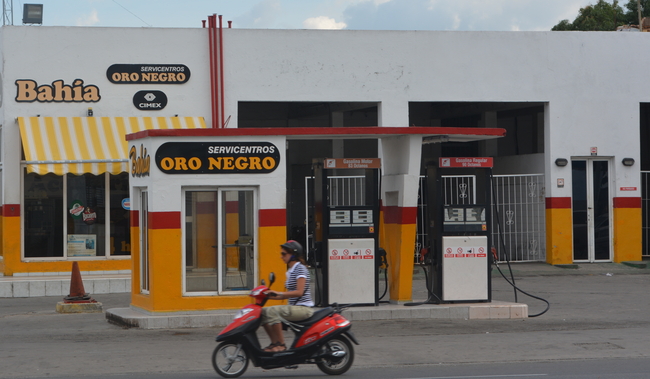
As part of this process, Standard Oil registered a claim with the Foreign Claims Settlement Commission in relation to the nationalisation of oil refineries and about 100 service stations which they claim to have owned and operated across the island of Cuba prior to the Revolution. Standard claimed $70 million in 1969, alleging that their refineries and petrol stations had been stolen by the Revolution. If substantiated in full, that claim would be worth around $605 million at today’s rates.
When the Title 111 suspension was lifted, Exxon Mobil, claiming to be the successors of Standard Oil, filed claims against CIMEX, CUPET and Corporation CIMEX SA (Panama), alleging that they had ‘trafficked’ in stolen property without paying compensation. These companies are all nationalised entities owned by the Cuban government. The case began in the District of Columbia District Court. Throughout the three main court hearings so far, the Defendants have been very ably represented by Michael Krinsky and his colleagues from New York law firm Rabinowitz, Boudin, Standard, Krinsky & Lieberman. This law practice has been Cuba’s legal counsel in the US since 1960.
In their defence to Exxon Mobil’s claim for compensation, CIMEX argued that the US Foreign Sovereign Immunities Act of 1976 (‘FSIA’) exempted the Cuban government and businesses belonging to the State from legal action in the US Courts. Their lawyers have pointed out that Helms – Burton does not give the US president, or the Courts, the power to ignore the immunity protections in FSIA. At the first instance hearing, the US Court for the District of Columbia refused CIMEX’s request to dismiss Exxon Mobil’s case on the ground that FSIA prevented them from suing the Cuban Government. Nevertheless, the Court decided that Helms – Burton does not override FSIA. Unfortunately, this was not the end of the matter as there are several exceptions to FSIA protection, including commercial activity, expropriation and waiver. Exxon Mobil argued that the commercial activity and expropriation exceptions applied. If that argument had been successful, CIMEX would not have had the protection afforded by FSIA and would not be immune from liability. The Court decided that the expropriation exception did not apply but the commercial activity exception did.
The case went on appeal to the US Court of Appeals for the District of Columbia Circuit. The Appeal Court agreed with the District Court’s ruling that Helms – Burton could not be used against the Cuban government in this case. It also accepted that the expropriation exception to FSIA did not apply. The Appeal Court did not make a definitive ruling on the commercial – activity exception. Instead, it ordered both sides to provide the District Court with more evidence on this point so that they could make a decision.
In the meanwhile, the case was referred to the US Supreme Court to determine whether Helms - Burton or the FSIA applies to Exxon Mobil’s claim against the Cuban government and emanations of state like CIMEX. The hearing took place at the end of February of this year. Exxon’s case was supported by a legal brief from the US Solicitor General which supported the argument that Helms– Burton should take precedence over FSIA. While accepting that foreign sovereign nations are protected from legal actions by FSIA, it argued that Helms – Burton was an exception to that principle. If FSIA applied in this case, it was argued, this would effectively nullify claims under Title 111, which would be contrary to the intentions of Congress which had intended to provide US citizens with a right to claim compensation from those who ‘trafficked’ in property nationalised by the Cuban Revolution.
At the hearing before the Supreme Court, CIMEX were represented by Michael Krinsky’s colleague, Professor Jules Lobel. CIMEX’s case was supported by papers filed by professors and scholars in both the US and Europe. The US academics pointed out that FSIA was America’s expression of the accepted standards of international law, which provides immunity to sovereign governments from legal claims in the American courts. The European law professors and scholars focussed on international law, which customarily provides immunity in cases of this kind. Both groups of academics expressed concern at the implications for international relations, and trade, if the protections contained in FSIA were overridden by Helms – Burton. The US experts were concerned that an adverse decision could expose their country to reciprocal treatment abroad. There was concern that an adverse finding against CIMEX by the Supreme Court could expose other countries to claims if it could be proved that their state- run businesses had, for example, exported goods to Cuba, financed projects on the island or used Cuban airports.
The US Supreme Court heard legal arguments on this case on 23rd February 2026. The case was considered alongside the Havana Docks case (reported in Cuba Si Spring issue). The Docks case is slightly different to the Exxon case as that case includes claims against various cruise ship companies which are not state – owned.
In June 2026, the Supreme Court ruled in favour of Exxon. By a majority of 6 to 3, the Judges ruled that Helms – Burton overrides the protections afforded by FSIA to most other countries in the world. That does not mean that this case has been resolved. Michael Krinsky sums up the current position thus:
Notwithstanding the Supreme Court’s decision on one of the threshold issues – whether Title III abrogates the Foreign Sovereign Immunities Act’s provision of sovereign immunity from suit, with exceptions - the case is far from over. The defendants have substantial arguments on the merits, including, as required by Title III, whether Exxon "own[s] the claim to the [confiscated] property." In a ruling not presented for review to the Supreme Court, the Court of Appeals for the District of Columbia Circuit has already held that Exxon’s former Panamanian subsidiary, not Exxon, owns the claim to the property under customary international law.
By accepting Exxon Mobil’s argument that Cuba does not have the protections contained in FSIA, and concluding that Helms – Burton should apply to Exxon’s claims, the Supreme Court is, in effect, singling out Cuba as a special case. The rules of international law and trade are expressed to be universal as they are designed to govern relations between all nations, including rules concerning trade. By removing these protections solely from Cuba, the US legal system has potentially weakened the principles of international law and trade by undermining their legitimacy as a universal system of rights and duties.
Meanwhile, Cuba endures these continuing attacks on its sovereignty. International solidarity is providing food, vital supplies despite the intensification of the blockade. In the Courts, the Cuban government has expert legal representation. An adverse decision by the Supreme Court is not the end of the matter.