Three new diagnostic systems delivered through Cuba Vive
Cuba Vive | Wednesday, 26 August 2026 | Click here for original article
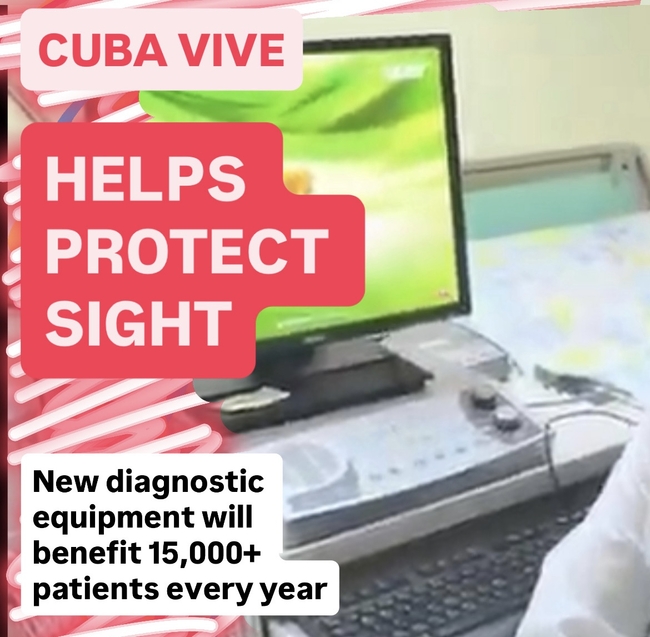
Thanks to Cuba Vive supporters, three new VISUALIX diagnostic systems will improve the diagnosis of serious visual and neurological conditions, benefiting more than 15,000 patients each year.
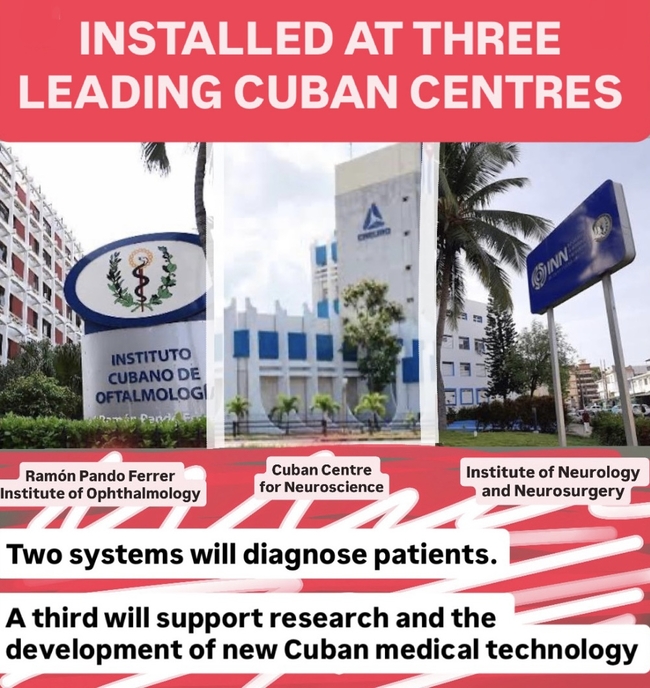
The advanced visual diagnostic systems developed in Cuba and funded through CSC’s medical appeal have been installed at thee leading Cuban hospitals and research centres:
- the Ramón Pando Ferrer Cuban Institute of Ophthalmology, Cuba’s national centre for complex visual conditions
- the Professor Dr Rafael Estrada Institute of Neurology and Neurosurgery, the country’s principal centre for diseases affecting the brain and nervous system
- the Cuban Centre for Neuroscience (CNEURO), where researchers will refine diagnostic tests and develop new clinical tools
The two hospital-based systems are expected to serve more than 15,000 patients annually. The third will enable CNEURO researchers to test and improve examination techniques before introducing them into clinical practice.
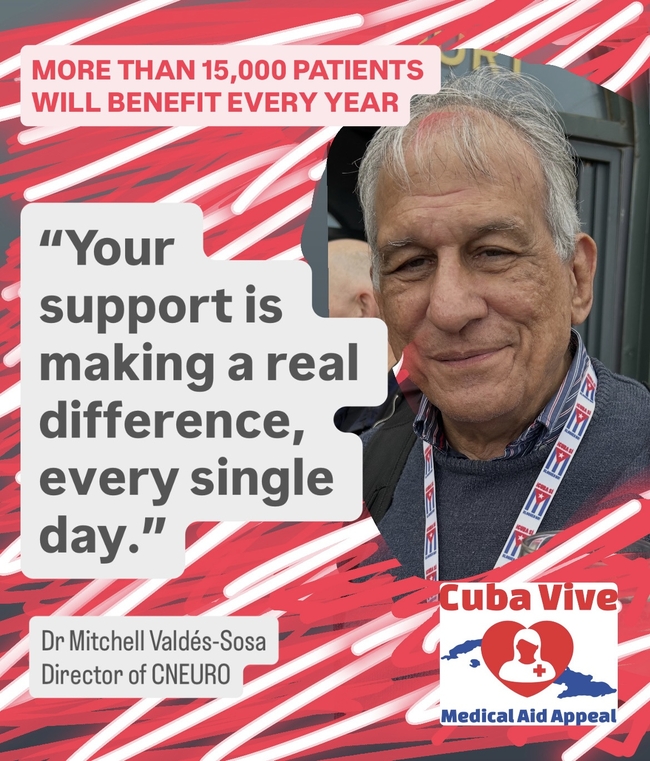
Thanking Cuba Vive supporters, CNEURO Director Dr Mitchell Valdés-Sosa said: “Your support is making a real difference, every single day – not only in clinics, but also in our research labs.”
VISUALIX was developed by CNEURO and is manufactured by IC Neuronic in Spain. It measures how the retina, optic nerves and brain respond to visual stimuli, providing results that do not depend on patients describing what they can see or responding to instructions.
This makes it particularly valuable for young children, older people with cognitive decline and patients with neurological or communication difficulties.
“This equipment allows us to assess visual function objectively and reliably – even in patients who cannot actively cooperate,” Dr Valdés-Sosa explained.
The technology can help specialists detect conditions including macular degeneration, retinitis pigmentosa, advanced glaucoma and optic neuropathies. It can also identify neurological diseases affecting the pathway between the eyes and the brain, as well as amblyopia (commonly known as lazy eye) and other childhood visual disorders.
The systems perform three main forms of testing. Visual Evoked Potentials measure the brain’s response to visual patterns; electroretinography records electrical activity in the retina; and objective visual-acuity testing assesses vision without relying on the patient’s responses.
The donation comes as Cuba’s ageing population is increasing demand for the early diagnosis of degenerative visual conditions. Yet comparable imported systems can cost around €50,000 each and are extremely difficult for Cuba to obtain because of the US blockade and restrictions on its access to international banking, foreign currency and global markets.
Much of Cuba’s existing specialist equipment is now more than 30 years old. Some machines have broken down and cannot be repaired because replacement parts and technical support are unavailable. Cuba Vive support has is helping to manufacture new machines and purchase essential components.
The project therefore provides more than three pieces of medical equipment. It reduces Cuba’s dependence on expensive imported technology while strengthening the country’s capacity for biomedical engineering, clinical research and scientific innovation.
Dr Valdés-Sosa attended UNISON’s national conference in Brighton in June 2026 as an international guest representing Cuba’s health workers. He spoke about the pressures facing Cuba’s universal public healthcare system and thanked UNISON members and the wider trade union movement for their practical solidarity through Cuba Vive.
“With the third system at CNEURO, we are also building a sustainable future of continuous improvement in visual diagnostics – a legacy of your support,” he said.
“Thank you for trusting us and for your commitment to the visual health of our people.”
The three VISUALIX systems demonstrate how Cuba Vive donations are supporting patients now while helping Cuba develop sustainable medical technology for the future.
Full text of thank you letter:
La Habana, 1 de agosto de 2026
To: Mr. Rob Miller
Coordinator of the Campaign for Solidarity for Cuba
Subject: Our deepest gratitude for the VISUALIX donation
Dear Rob,
On behalf of the Cuban Center for Neuroscience (CNEURO) and the entire team behind the VISUALIX project, I want to say a huge thank you for your generous support.
Thanks to Cuba Vive, we have installed three complete VISUALIX diagnostic stations across our national health and research network:
-
The Cuban Institute of Ophthalmology "Ramón Pando Ferrer"– the national and international reference centre for ophthalmology, which provides care to patients from all provinces with complex visual pathologies.
-
The Institute of Neurology and Neurosurgery (INN) "Prof. Dr. Rafael Estrada"– Cuba's main centre for the study and clinical care of the brain and nervous system, with extensive experience in neurological diseases affecting the visual pathway.
-
The Cuban Center for Neuroscience (CNEURO)– our own research and development centre. This third unit plays a crucial role beyond direct patient care: it allows our biomedical engineering and clinical research teams to fine-tune new diagnostic tests, develop innovative clinical tools, and validate new examination protocols in a controlled research setting before rolling them out to the two clinical hospitals. This ensures that the technologies we deploy are always optimised and safe.
This equipment allows us to assess visual function objectively and reliably — even in patients who cannot actively cooperate, such as young children, elderly adults with cognitive decline, and neurological patients with communication difficulties.
Why this matters:
Before this donation, visual electrophysiological studies in Cuba depended on expensive imported technologies that were hard to access. Now we can:
- Diagnose degenerative and neurological visual diseases earlier
- Reduce our dependence on foreign technology
- Strengthen our own national capacities for biomedical assembly, integration, and innovation
We estimate that the two clinical systems alone will serve more than 15,000 patients annually. And with the third system at CNEURO, we are also building a sustainable future of continuous improvement in visual diagnostics — a legacy of your support.
Thank you for trusting us and for your commitment to the visual health of our people. Your support is making a real difference, every single day — not only in clinics, but also in our research labs.
With sincere gratitude,
Dr. Mitchell Valdes Sosa
Director (Cuban side)
Cuban Center for Neuroscience (CNEURO)
Havana, Cuba